
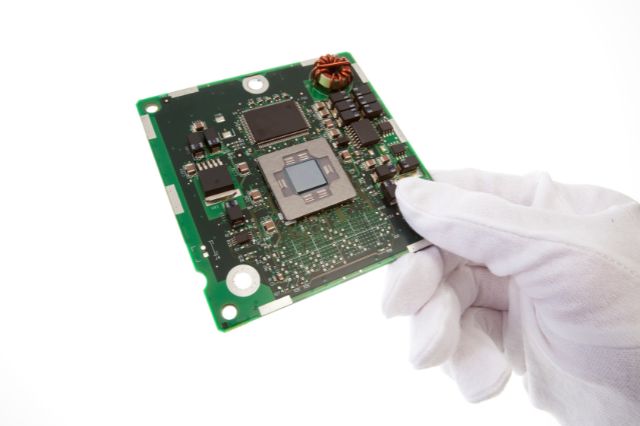
Ionic contamination is one of those issues that can cause a lot of issues regarding product quality and performance without being immediately obvious. It refers to the presence of electrically charged residues left behind on a PCB after manufacturing or handling. These residues might be tiny, but their impact can be significant.
Understanding what causes ionic contamination, how it affects your boards and how to control it is important for anyone involved in PCB manufacturing or inspection. Let’s take a closer look at what Ionic contamination is, how its caused, what it does and how to prevent it.
What exactly is ionic contamination?
Ionic contamination is made up of charged particles. Often residues from things such as flux, cleaning agents, human handling or exposure to particles in the environment. Common examples include salts, acids and other conductive materials that remain on the surface of a PCB.
These contaminants are usually invisible to the naked eye, which makes them particularly problematic. Just because a board looks clean doesn’t mean it actually is.
When moisture is introduced, these ionic residues can dissolve and become conductive. That’s when problems start to appear.
Why ionic contamination is a problem
The biggest concern with ionic contamination is the effect it has on electrical performance and the reliability of products long-term.
When contaminants become conductive, they can create unintended electrical paths across the board. This can lead to problems such as leakage currents, signal interference and corrosion of components and tracks
Over time, these issues can result in intermittent faults or complete failure, often long after the product has left production.
What causes ionic contamination?
There are several common sources of contamination during the PCB manufacturing and assembly process.
Flux residues are one of the main contributors. Even “no-clean” fluxes can leave behind ionic residues under certain conditions. If the reflow process isn’t optimised, these residues may not fully activate or evaporate as they are meant to.
Cleaning processes can also introduce contamination if they are not properly controlled. Ironically, using the wrong cleaning agents or poor rinsing techniques can leave more residue behind than they remove.
Human handling is another factor that is often overlooked. Oils and salts from our skin can transfer onto the board during assembly or inspection and contribute to contamination levels.
Environmental factors such as humidity and airborne pollutants can also cause ionic contamination, especially if boards are stored incorrectly.
How is ionic contamination measured?
To control ionic contamination, you first need to be able to measure it accurately.
The most common method is Resistivity of Solvent Extract (ROSE) testing. This measures the total ionic content on a PCB by dissolving residues into a solvent and analysing its conductivity.
While ROSE testing provides a general overview, it doesn’t identify specific contaminants. For more detailed analysis, techniques like ion chromatography can be used to pinpoint exactly what residues are present.
Performing tests such as these and understanding the results, is how you are able to identify the root causes of ionic contamination and improve your processes.
Preventing and controlling ionic contamination
Managing and preventing ionic contamination all comes down to how you process control and staying consistent.
This includes:
- Using the correct type and amount of flux
- Optimising soldering profiles
- Implementing effective cleaning processes
- Monitoring water quality in cleaning systems
- Controlling handling procedures
- Storing boards in suitable environments
Regular testing and inspection should also be part of your quality strategy. Catching contamination early can prevent expensive failures later on.
Where IPC standards come in
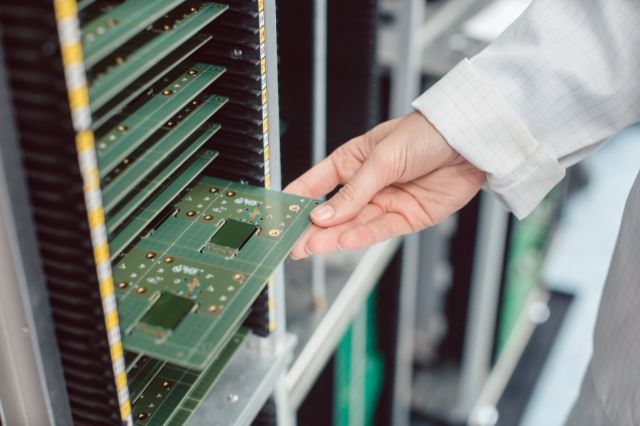
This is where industry standards become essential. Standards such as those from IPC provide clear guidelines on acceptable contamination levels and best practices for manufacturing and cleaning.
For example, IPC J-STD-001 includes requirements for residues and contamination and helps manufacturers ensure their processes meet industry expectations.
Understanding and applying these standards correctly can make a huge difference in product reliability.
Get IPC certified with The Electronics Group
At The Electronics Group, we deliver IPC courses such as IPC J-STD-001 as well as our range of practical electronics skills training courses to help engineers, technicians and inspectors understand not just the standards, but how they apply in real-world scenarios.
From recognising contamination risks to improving cleaning processes and inspection techniques, this knowledge can directly improve quality and reduce failure rates.
If your team is working with high-reliability electronics, investing in this kind of training can be a smart step towards more consistent, dependable results.
Final thoughts on ionic contamination in PCBs
The risks of ionic contamination are too significant to ignore. PCBs can get contaminated easily if processes aren’t strictly controlled and even though you cannot always see it, that does not mean you are in the clear.
By understanding where the contamination comes from, how to measure it and how to control it, you can protect both your products and your reputation.
And with the right training and standards in place, it becomes much easier to stay ahead of the problem rather than reacting to it later.